Opslag

Hvad betyder det, at Gud bliver "alt i alt", når Kristus ifølge Paulus har underlagt sig alle sine fjender? Gregor af Nyssa om 1 Kor 15,28

Billede
"Herren er Liv. Ifølge Apostlen vil Kristus forbinde sig med Faderen med hele sit legeme, når han engang overgiver riget til Gud. Kristi legeme består i sin helhed af menneskets natur, hvormed Kristus er forenet. Paulus kan af samme grund omtale Kristus som formidler mellem Gud og mennesker. Han, som er i Faderen, men som har levet blandt mennesker, træder frem mellem Gud og mennesker. Kristus forener hele menneskeheden med sig selv, og gennem sig selv med Faderen. Det kommer til udtryk i evangeliet, når Herren siger: ”Du, Fader, er i mig, og jeg er i dig, for at de må være ét i os”. Ifølge evangeliets løfter, er vi ikke længere Herrens slaver, men som forligt med Gud, regnes vi blandt hans venner. Ikke desto mindre skal Kristus herske ”indtil han har lagt alle sine fjender under sine fødder”. Den mest ærbødige måde at forstå det på må være, at Kristus tappert holder fast i magten indtil al modstand mod det gode hører op. Når han har samlet hele sit rige, vil Kristus overgive...

Origen: "Jesus confirms all of the beatitudes"

"Jesus confirms all of the beatitudes he speaks in the Gospel, and he justifies his teaching though his own example. “Blessed are the meek” is what he says of himself. “Learn of me, for I am meek.” “Blessed are the peacemakers.” Who is a peacemaker like my Lord Jesus, who is our peace, who made enmity to cease and destroyed it in his flesh? “Blessed are they who suffer persecution for righteousness’ sake.”  No one more than the Lord Jesus, who was crucified for our sins, endured persecution for righteousness’ sake. The Lord, then, displays all the beatitudes as being realized in himself. Conforming to that which he said, “Blessed are those who weep,” he himself wept over Jerusalem, to lay the foundation of this beatitude also." ( Homilies on Luke 38.1-2, SC 87, ed. Crouzel, Fournier, Périchon, p. 443 quoted from Dale C. Allison, Studies in Matthew: Interpretation Past and Present (Baker Academics 2005), p. 150)

First thoughts on reconciliation and 'populism'

Billede
Dialogues are currently going on in the ecumenical movement about the church's response to so-called 'populism'. For example, the Conference of European Church recently had a conference on what "clergy could and should do about" populism when they encounter it at parish level. In January 2020 the Nordic Faith & Order meeting will have a similar conference in Oslo, as the theme of the WCC general Assembly 2021 is "Christ ́s love moves the world to reconciliation and unity" and "Churches responding to populism and polarisation". As I plan to participate in Oslo, here are my initial thoughts on the issues of "reconcilation and populism": First of all I think we should consider whether we should use the term 'populism' or whether there might not be more appropriate terms, thinking, not least, of the complexity of what we are dealing with. Moreover, the term 'populism' is clearly derogative -- I mean, how many wo...

Presenting: The Gospel Preached by the Apostles: New edition of Elhanan Winchester's discourse on particular and general redemption and salvation

Billede
I'm happy to present a new edition of Elhanan Winchester's discourse on particular and general redemption and salvation.  The book is available at Amazon here for only $10. My foreword to the book: Elhanan Winchester (1751-1797) was an American Baptist preacher and a founder of the Society of Universal Baptists and the United States General Convention of Universalists. Winchester lived in a time where philosophical and theological rationalism questioned classical trinitarian orthodoxy. Against rationalism Winchester defended the traditional belief in the divinity of Jesus and his resurrection. Moreover, Winchester’s biblical studies led him to embrace the doctrine of the final restoration or “apokatastasis” of all things – a doctrine that was originally defended by Church fathers such as Origen and Gregory of Nyssa, but was now enjoying prominence in continental radical pietism as well as parts of English theology. Drawing on Georg Klein-Nicolai’s book The Everlastin...

Clement: "truth, like the bee, harming nothing, delights only in the salvation of men"

The Lord pities, instructs, exhorts, admonishes, saves, shields, and of His bounty promises us the kingdom of heaven as a reward for learning; and the only advantage He reaps is, that we are saved. For wickedness feeds on men’s destruction; but truth, like the bee, harming nothing, delights only in the salvation of men. (from the Protrepticos)

John Chrysostomos on Jesus' resurrection

"along with himself, Christ made the whole world arise" (On the Incomprehensible Nature of God, II,44)

Pascal on the Hidden God

If there were no obscurity, man would not be sensible of his corruption; if there were no light, man would not hope for a remedy. Thus, it is not only fair, but advantageous to us, that God be partly hidden and partly revealed; since it is equally dangerous to man to know God without knowing his own wretchedness, and to know his own wretchedness without knowing God. (Pensees, 446/586) What can be seen on earth indicates neither the total absence, nor the manifest presence of divinity, but the presence of a hidden God. Everything bears this stamp. (Pensees, 449/556) “Let them at least learn the nature of the religion they are attacking, before they attack it. If this religion boasted of having a clear vision of God, and of possessing Him plain and unveiled, then to say that nothing we see in the world reveals Him with this degree of clarity would indeed be to attack it. But it says, on the contrary, that man is in darkness and far from God, that He has hidden Himself from man’s kn...

Russell on Wittgenstein

"after all, Mr Wittgenstein manages to say a good deal about what cannot be said, thus suggesting to the sceptical reader that possibly there may be some loophole through the hierarchy of languages, or by some other exit" (Russell, 2003, p. xxi)

Augustine: "a thing is not ineffable which can be called ineffable"

There is some contradiction of terms, since, if that is ineffable which cannot be spoken of, a thing is not ineffable which can be called ineffable " (Christian Instruction 1.6.6)

A few notes on the historical background of contemporary Christian Anarchism

Billede
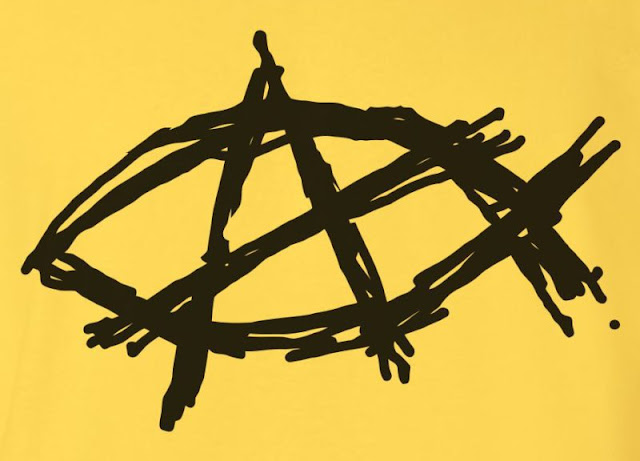
Note: the following post is the first of a planned series on Christian anarchism titled 'The Kingdom of God is Anarchy: Anarchy as a Christian Practice of Faith'. The below is the first part of the introduction. The links between Christian theology and practice on the one hand, and a radical, anti-authoritarian rejection of all kinds of dominance on the other, are far from being novel. Throughout most of Church history, Christian thinkers have frequently returned to Jesus’ original criticism of all forms of political and religious oppression, and his proclamation of the kingdom of God, where power is replaced by love and authority by freedom. Paul – even if his thinking is often regarded as somewhat authoritarian – made it clear, that Jesus will eventually destroy “all rule, and all authority and power”, and that Christians fight against the principialities, powers and rulers of “this dark world”. For Christians this meant not to practice any kind of violence or domin...

What is wrong with contemporary worship music? Or: Why our music must be cruciform.

Billede
I recently found myself having to walk out from a worship service at a Baptist Church, as I could not stand the kind of worship music that is becoming the norm among Evangelicals. This happened when the European Baptist Federation celebrated the opening of its annual conference, this year in Lviv, Ukraine. As it was a celebration the volume was extra high, etc., making the music quite intolerable. I would normally argue that as long as we are gathered in the name of Christ, no question of aesthetics can justify leaving church – no matter how bad the music is! While I still think this is true in principle, I felt this time I had to go and breathe some air (and get a beer) in order to reflect upon what it is with contemporary worship music, that I dislike so much. What I found is that it’s not just a matter of taste and style, but a matter of how form relates to content. The misconception that the gospel must in some way be given an arbitrary form that does not follow from its conte...

"A perfect likeness between Christian and anarchist"

Billede
Note: the following post is the first of a planned series on Christian anarchism titled 'The Kingdom of God is Anarchy: Powerlessness as a Christian Practice of Faith'. The below is the first part of the introduction. ”There is a perfect likeness between Christian and anarchist: their object, their instinct, points only toward destruction. […] The Christian and the anarchist: both are decadents ; both are incapable of any act that is not disintegrating, poisonous, degenerating, blood sucking ; both have an instinct of mortal hatred of everything that stands up, and is great, and has durability, and promises life a future.” (Friedrich Nietzsche, Der Antichrist §58) The above quote appears in the German philosopher Friedrich Nietzsche’s The Antichrist from 1895. Nietzsche wrote his famous book in at time when anarchism as a political philosophy was gaining increasing support. Many anarchists were strongly critical of religion in general, but for Nietzsche he fundamental...

Eckhart on Paul: "In seeing nothing, he saw the divine nothing."

"The light that is God is unmingled, no admixture comes in. This was a sign that it was the true light he saw, which is Nothing (niht). By the light he meant quite simply that with his eyes open he saw nothing. In seeing nothing, he saw the divine nothing." (Pr. 71).

Henry Suso: "How should man better know the hidden things of God than in His assumed Humanity?"

” The bottomless abyss of My hidden mysteries (in which I order everything according to My eternal providence), let no one explore, for no one can fathom it. And yet, in this abyss, what thou askest about and many things besides are possible, which yet never happen. However, know this much, that, in the order in which emanated beings now are, a more acceptable or more pleasing way could not be. The Lord of nature knows well what He can do in nature. He knows what is best suited to every creature, and He operates accordingly. How should man better know the hidden things of God than in His assumed Humanity? How might he, who has forfeited all joy through irregular lusts, be rendered susceptible of regular and eternal joy? How would it be possible to follow the unpracticed way of a hard and despised life, unless it had been followed by God Himself? If thou didst lie under sentence of death, how could He, who should suffer the fatal penalty in thy stead, better prove His fideli...

Lactantius on the Golden Rule

"When the affairs of men were in this condition, God pitied us, revealed and displayed Himself to us, that in Himself we might learn religion, faith , purity, and mercy; that having laid aside the error of our former life, together with God Himself we might know ourselves, whom impiety had disunited from Him, and we might choose the divine law , which unites human affairs with heavenly, the Lord Himself delivering it to us; by which law all the errors with which we have been ensnared, together with vain and impious superstitions , might be taken away. What we owe to man , therefore, is prescribed by that same divine law which teaches that whatever you render to man is rendered to God . But the root of justice , and the entire foundation of equity, is that you should not do that which you would be unwilling to suffer, but should measure the feelings of another by your own. If it is an unpleasant thing to bear an injury, and he who has done it appears unjust , transfer to...

The apophatic un-kingdom of God

Billede
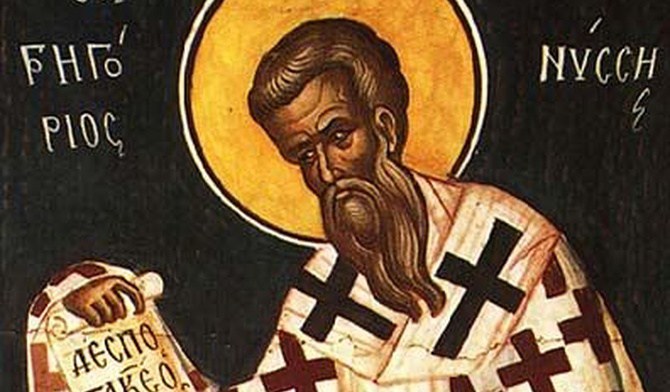
“There is one true and perfect power which is above all things and governs the whole universe. But it rules not by violence and tyrannical dictatorship, which inforces the obedience of its subjects through fear and compulsion." ( Graff, St. Gregory of Nyssa, the Lord’s Prayer, the Beatitudes (Paulist Press; 1953), p. 51) Though Gregory of Nyssa does not present what we would today consider a systematic political philosophy, he frequently criticizes political power, domination and violence. The homilies on the Lord’s Prayer are no exception. The Kingdom of God does not rule by “violent kingship” or “tyrannical dictatorship”, enforcing the obedience of its subjects through “fear and compulsion”, says Gregory. When we pray for the Kingdom of God, we pray that the “good power” which already governs the whole universe will free us from the tyranny of the Devil through the Holy Spirit. A similar line of thought appears in Gregory’s homilies on the Beatitudes. The Kingdom o...

“There is one true and perfect power [...] But it rules not by violence and tyrannical dictatorship[...]"

“There is one true and perfect power which is above all things and governs the whole universe. But it rules not by violence and tyrannical dictatorship, which inforces the obedience of its subjects through fear and compulsion." ( Graff, St. Gregory of Nyssa, the Lord’s Prayer, the Beatitudes (Paulist Press; 1953), p. 51) “Μία τῶν πάντων ὑπέρκειται ἡ ἀληθὴς ἐξουσία καὶ δύναμις, ἡ τοῦ παντὸς ἀναδεδεγμένη τὸ κράτος, καὶ βασιλεύουσα οὐ βιαίᾳ τινὶ καὶ τυραννικῇ δυναστείᾳ, φόβοις καὶ ἀνάγκαις ὑποζεύξασα τῇ ὑποταγῇ τὸ ὑπήκοον.” (De or. Dom. III, PG 256)

A Christian Anarchist? Gregory of Nyssa's Criticism of Political Power

Article published in Political Theology 2016. Get it here . Abstract: The Cappadocian Church father Gregory of Nyssa (c. 335–395 AD) frequently attacks political power and domination in different forms. He does not present a systematic political philosophy, but there is a range of underlying theological, anthropological, and moral philosophical ideas at play in Gregory’s criticism. Especially important is Gregory’s theological anthropology, and the unity of humankind. In this article, it is argued that Gregory’s political thinking can be described as ‘‘anarchism,’’ in so far this is defined as the universal rejection of all kinds of domination and the identification of justice with any positive political state of affairs.

Origen on church rule and not taking civil office

"[...]we know of the existence in each city of another sort of country, created by the Logos of God. And we call upon those who are competent to take office, who are sound in doctrine and life, to rule over the churches. We do not accept those who love power. But we put pressure on those who on account of their great humility are reluctant hastily to take upon themselves the common responsibility of the church of God. And those who rule us well are those who have had to be forced to take office, being constrained by the great King who, we are convinced, is the Son of God, the divine Logos. And if those who are chosen as rulers in the church rule well over God's country (I mean the church), or if they rule in accordance with the commands of God, they do not on this account defile any of the appointed civic laws. If Christians do avoid these responsibilities, it is not with the motive of shirking the public services of life. But they keep themselves for a more divine and necessa...

Origen on Christians benefitting their country by praying in secret

"If Celsus wishes us to be generals for our country, let him realize that we do this; but we do not do so with a view to being seen by men and to being proud about it. Our prayers are made in secret in the mind itself, and are sent up as from priests on behalf of the people in our country. Christians do more good to their countries than the rest of mankind, since they educate the citizens and teach them to be devoted to God, the guardian of their city; and they take those who have lived good lives in the most insignificant cities up to a divine and heavenly city." (Con. Cel. VIII,74)