Exceptions to God's love? A thought on violence and salvation, Anabaptists, Yoder, Barth and Luther
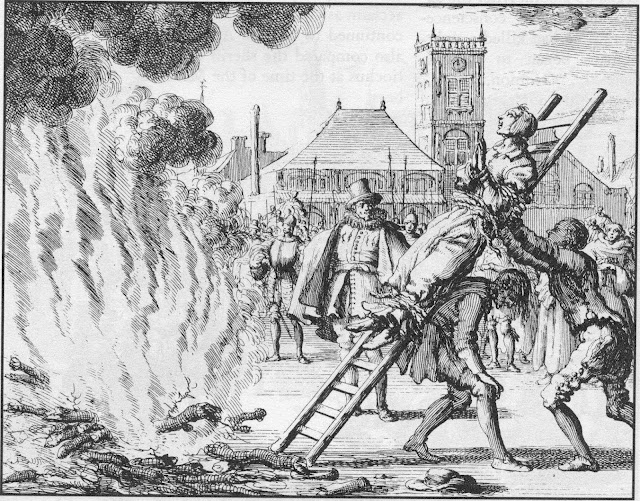
"Anabaptists" being tortured for rejecting violence and saying that there will be an end to otherworldly torture. In the Lutheran Augsburg Confession (CA) the so-called Anabaptists were condemned not just for their baptist practices but also for their views on eschatology, soteriology and ethics. First there is the Anabaptist rejection of violence. The Lutherans condemned the Anabaptists for teaching the necessity of not engaging as soldiers in “just war”, to “sit as judges” and to award “just punishments”. ”They condemn the Anabaptists who forbid these civil offices to Christians.” (CA § XVI) On soteriology we hear that Lutherans believe that the devil and sinners shall be tortured without end, while the Anabaptists are condemned for teaching that there will be an end to torture: ”They condemn the Anabaptists, who think that there will be an end to the punishments of condemned men and devils.” (CA § XVII) While the claim that there will be an end to punishments...
